
Last updated November 23, 2026
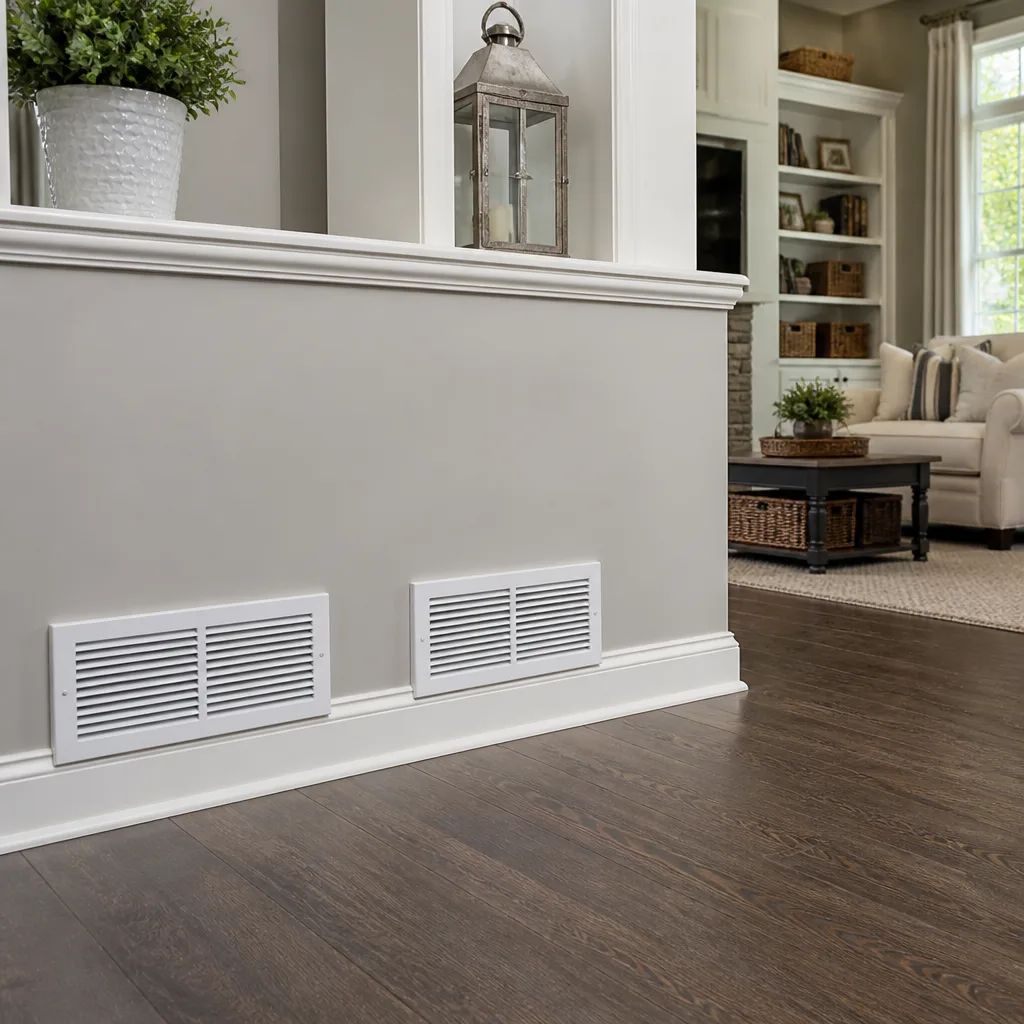 Whole-home duct cleaning
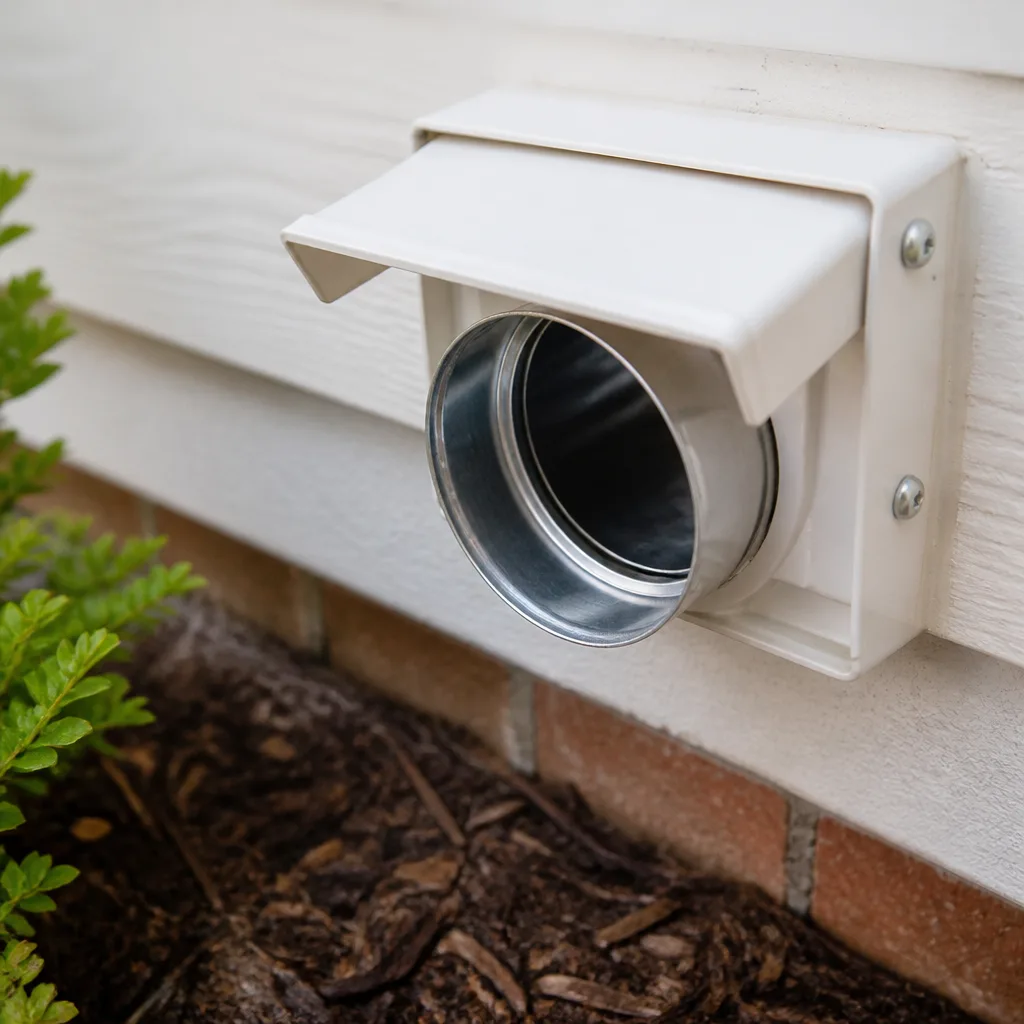 Dryer vent cleaning
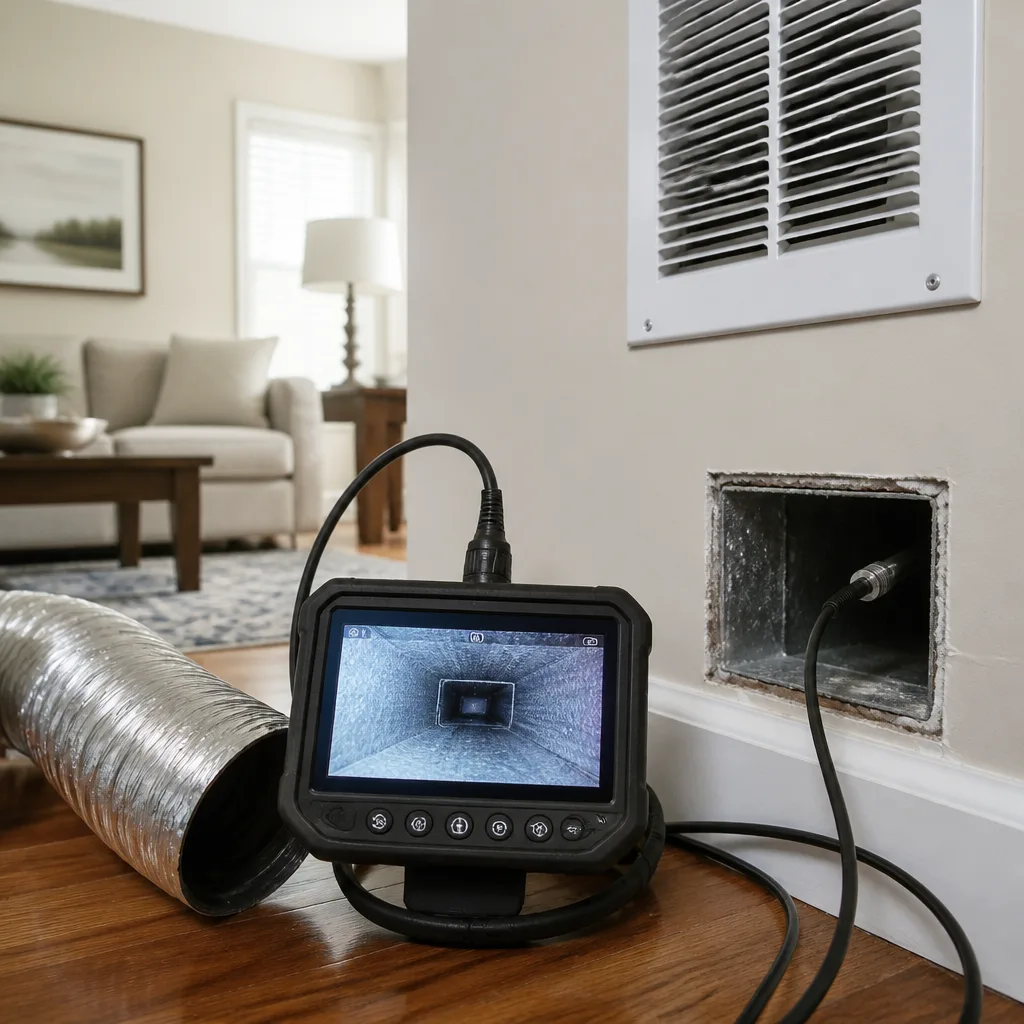 Camera inspection
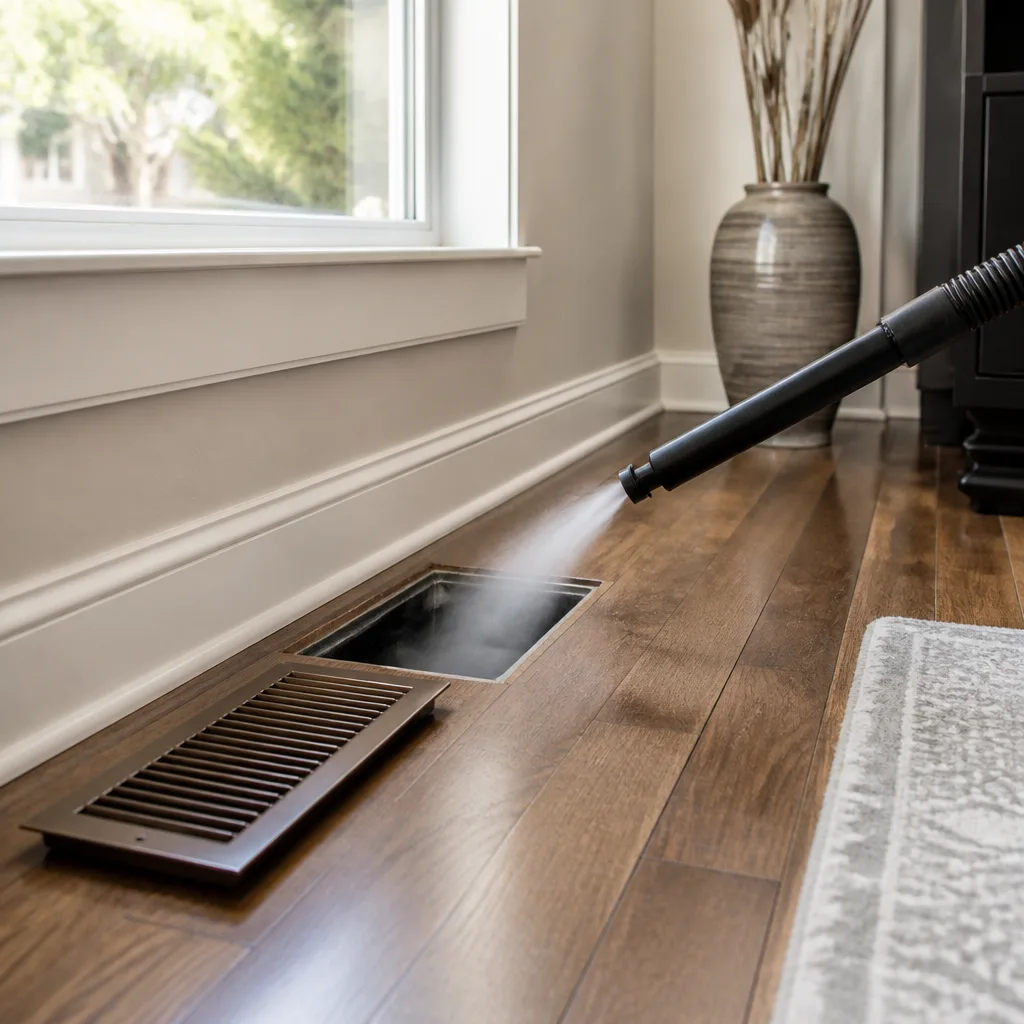 Sanitizing & deodorizing
Whole-system duct and dryer vent check with before-and-after photos - you see exactly what came out of your vents
That "$99 whole-house special" is a bait ad - the real number appears once they are in your hallway, or the "clean" is a shop-vac at the register. We photograph the inside of your ducts before and after instead.
DIY vs Professional Air Duct Cleaning: The Tacoma Homeowner’s Decision Guide
A consumer dryer vent brush kit pushed into a supply register doesn’t clean a duct. It dislodges debris from one section and relocates it to another, often pushing it closer to the air handler. That single fact explains most of the confusion around this job. People buy a kit, run it down a few vents, see dust fall out, and assume the system is cleaner. What actually happened is a redistribution: the loose material that was sitting in a low-airflow stretch of duct is now sitting somewhere the blower can pick it up and push it into the rooms where you sleep. In this guide, we’ll walk through what DIY duct work can genuinely accomplish in a Tacoma home, where the line sits between maintenance and a real cleaning, and how to know which side of it you’re on.
Quick Answer
DIY air duct cleaning can handle surface-level register dust, lint at the dryer vent cap, and filter changes, but it cannot remove debris that’s bonded to duct walls or sitting in the trunk lines, because consumer tools lack the simultaneous agitation and high-CFM negative-pressure extraction a professional system uses. For a Tacoma home with more than 10 years of accumulated buildup, pets, recent renovation dust, or any sign of moisture or rodents, professional cleaning is the only method that actually removes the material rather than moving it. The rest of this guide is about figuring out which group you’re in.
Styles & brands we work with
- Whole-home duct cleaning
- Dryer vent cleaning
- Camera inspection
- Sanitizing & deodorizing
Table of Contents
- The Physics Problem: Why Consumer Tools Can’t Extract
- What You Can Legitimately Do Yourself
- When Professional Cleaning Isn’t Optional
- The Cost of Waiting: What 12 Months of Half-Cleaning Does
- The Decision Matrix: Which Side of the Line Are You On?
- What Professional Equipment Actually Looks Like
- How a Full Professional Service Runs, Step by Step
- Common Mistakes to Avoid
- When to Call a Professional
The Physics Problem: Why Consumer Tools Can’t Extract
Effective duct cleaning requires two things happening at the same time: mechanical agitation to break the bond between debris and the duct wall, and strong negative pressure to pull that loosened material out of the system before it settles again. Consumer equipment delivers neither condition at sufficient scale. A handheld brush kit agitates, but there’s no vacuum attached that can move enough cubic feet per minute to carry the dislodged material out. A shop vac pulls air, but without agitation it only lifts what’s already loose, which is the smallest fraction of what’s actually in the ducts.
Think about how the airflow works inside a real duct system in a Tacoma home. The supply trunk carries heated or cooled air at a pressure higher than the room, and every branch line has its own resistance. Debris collects where velocity is lowest: the corners of the trunk, the seams, the flex runs that got bent tighter than they should have been during installation. A brush pushed from a register reaches perhaps the first few feet of one branch. It doesn’t reach the trunk, it doesn’t reach the return side, and it doesn’t reach the coil or the plenum where a lot of the worst material accumulates.
Professional systems solve this with a two-part approach running simultaneously. Contact agitation from a rotating brush or air whip goes into the duct and mechanically scrubs the walls. At the same moment, a high-CFM negative-pressure machine connected at the main trunk pulls the loosened material into a contained filtration unit. The debris never has a chance to move into the living space because the pressure inside the system is lower than the pressure in the room.
This is the part that matters most. Without simultaneous agitation and extraction, you’re not cleaning. You’re stirring.
What You Can Legitimately Do Yourself
We’re not going to pretend a homeowner can’t do anything useful between professional cleanings. There are real maintenance tasks that make a meaningful difference and cost very little. Here’s what we’d put on a realistic DIY list for a Tacoma home.
- Register and grille cleaning. Pull the supply and return registers off and wash them in the sink or with a hose. Dust cakes on the back of a supply register faster than you’d expect. Wiping them down every few months keeps that dust from blowing into the room with every cycle.
- Filter maintenance. Check your filter every 30 days and change it according to what the manufacturer specifies. A clogged filter forces the blower to work harder, raises your energy use, and reduces airflow to the point where dust settles in the ducts instead of staying airborne long enough to reach the filter. This is the single highest-value thing a homeowner can do.
- Dryer vent lint removal at the termination cap. Lint accumulates at the outside flapper and inside the last foot of the run before the cap. That is accessible on most homes and it’s the highest-risk spot in the whole vent line. Clearing it every few months reduces fire risk. Pair this with our dryer vent cleaning when the full run needs to be cleared.
- Visual inspection of accessible flex duct. If you have flex duct runs exposed in an unfinished basement, crawlspace, or garage, you can look at them. Check for crushed sections, disconnected collars, visible tears, or condensation on the outer jacket. You can’t fix what you find, but you can document it and know exactly what to point out when you call.
- Return-air grille vacuuming. The return grille catches a lot of the largest debris. A vacuum with a brush attachment on the room-side face is a legitimate 10-minute job that helps every cycle.
Those five tasks are the honest boundary of what a homeowner can accomplish without professional equipment. Everything past that line is where the DIY approach starts doing more harm than good.
When Professional Cleaning Isn’t Optional
Some conditions don’t respond to surface maintenance at all, and pushing them back another season makes the job harder, not easier. In our experience serving homes across Tacoma, these are the scenarios where we’d tell a homeowner to stop putting it off.
- Post-renovation debris. Drywall dust, sawdust, insulation fibers, and construction adhesive particles travel through the return system during a remodel. A renovation generates more debris in a duct system in six weeks than a normal home produces in three years. Drywall dust is especially stubborn; it settles and bonds into a paste on duct walls when humidity rises.
- Rodent evidence. Droppings, nesting material, or a smell in specific rooms is a confirmed biological contamination event. You cannot clean this out with a brush kit, and the health concern isn’t cosmetic. This needs contained extraction with HEPA-level filtration, sanitizing, and a search for the entry point.
- Moisture intrusion. Water stains near a register, condensation on exposed duct, or a musty smell when the system first turns on after a stretch of dry days. Tacoma’s wet winters make this a real concern in crawlspaces and older construction where duct runs sit in unconditioned space. Moisture plus organic dust plus dark equals mold, and once mold establishes on duct liner or flex, cleaning means replacement of the affected run.
- Ductwork older than 20 years. Sheet metal from decades back was frequently sealed with mastic that has since cracked and fallen away, and the seams leak. Old flex runs have internal liner that has begun to delaminate. Cleaning reveals this; the repair and sealing work is what actually extends the system’s useful life. Duct leaks don’t fix themselves.
- Any known HVAC failure. If the system has had a coil freeze, an evaporator leak, or a blower motor replacement, the system is already open and full of accumulated debris from the failure event. Cleaning the whole HVAC cleaning system (coil, blower, plenum, and duct) at the same time is the only complete answer.
The Cost of Waiting: What 12 Months of Half-Cleaning Does
Here’s the scenario we see more than any other: a homeowner brushes the accessible ducts once, sees some dust come out, and stops. Twelve months later, the system is measurably worse than it was when they started. The reason is straightforward once you understand what happened during that DIY attempt.
When you push a brush down a duct and pull it back, you dislodge material from where it was originally deposited. Without extraction, that material doesn’t leave the system. It redistributes to a new resting place. Sometimes that’s a lower-velocity branch. Sometimes it’s directly inside the plenum. Sometimes it ends up on the upstream face of the evaporator coil, where it mixes with condensate and creates a wet mat that blocks airflow and becomes a biological growing surface.
Over a full cycle of seasons in Tacoma, three things compound:
- The blower motor works harder. Reduced airflow through a partially blocked coil raises static pressure and drive amperage. This is measurable on a service call.
- The coil loses efficiency. Dust on the coil insulates it from the air it’s supposed to be conditioning. Cooling and heating become slower and more expensive.
- Biological growth establishes on the wet dust. Once that happens, no brush can clean it. The coil needs controlled cleaning and the ducts need sanitizing.
A half-finished DIY cleaning isn’t neutral. It’s a small transfer of burden from the walls of the duct to the most expensive components in the system. That’s an argument in favor of calling for the pros earlier than you think.
The Decision Matrix: Which Side of the Line Are You On?
Read across the categories that match your home. If any one of them lands in the “professional” column, professional service is the right call. If every category lands in the “DIY is fine” column, you can reasonably wait and do the maintenance tasks above.
- Home age: Under 10 years and previously cleaned – DIY maintenance is fine. Between 10 and 20 years and never professionally cleaned – professional service recommended. Over 20 years with original ductwork – professional service is required.
- Duct material: Sealed sheet metal with no visible damage – DIY maintenance is fine. Flex duct with visible crush or tear – professional service. Duct board or duct liner with any visible wear – professional service.
- Pets and occupants: No pets, no smokers, no allergy concerns – DIY maintenance is fine. Pets that shed heavily – professional service recommended. Indoor smokers, asthmatics, or young children with respiratory sensitivity – professional service.
- Recent renovation: No renovation in the last 5 years – DIY maintenance is fine. Any drywall, flooring, or insulation work in the last 12 months – professional service required.
- Signs of trouble: No visible dust plumes, no musty smell, no uneven airflow – DIY maintenance is fine. Visible dust plume from a supply register when the system starts – professional service. Persistent musty odor – professional service required.
- Last cleaning: Within the last 3 years – DIY maintenance is fine. Between 3 and 6 years – professional service recommended. More than 6 years ago, or never – professional service required.
If you’re unsure, call our team or use the air duct cleaning overview to understand what a professional assessment involves. There’s no reason to guess on a system that costs what an HVAC system costs to replace.
What Professional Equipment Actually Looks Like
The gap between consumer tools and professional equipment is bigger than most homeowners realize. Here’s a plain-English look at the machinery, without the marketing language.
Contact agitation systems. A rotating brush head or a compressed-air whip travels into the duct and physically scrubs the walls. The brush head needs to reach the trunk lines and main runs, which means the equipment has to be flexible enough to navigate bends but stiff enough to spin without collapsing. Rotobrush systems are purpose-built for this job. Nikro makes similar equipment. Both are commercial systems, not repurposed shop vacs or entry-level machines with a sticker change.
High-CFM negative-pressure extraction. The vacuum at the far end of the system needs to pull enough air volume to keep up with the agitation. Consumer vacuums don’t come close. The professional machine connects at the main trunk or plenum, and the whole system is under negative pressure during the entire cleaning, so debris goes into the vacuum, not into the room.
Filtration and containment. On jobs with known biological contamination, or where living spaces need protection during the work, our technicians deploy Abatement Technologies air filtration equipment – the same remediation-grade gear used in mold and hazardous-material containment. It’s the reason we can do contained, controlled cleaning environments rather than just hoping the dust stays where we put it.
Inspection and assessment capability. Familiarity with Honeywell and Aprilaire systems means our technicians can look at what a home already has in place – a whole-house humidifier, a media filter cabinet, an HRV or ERV – and recommend whether the existing setup is helping or hurting air quality. Cleaning alone doesn’t always fix the source of the problem; sometimes the filtration and ventilation equipment around the ducts is the real answer.
One crew. Five services. That’s how we’d rather handle a home than hand it off between three contractors. Our technicians have up to 13 years of experience, and the Tacoma air duct cleaning experts on our team work with this exact equipment daily.
How a Full Professional Service Runs, Step by Step
Exactly what a professional cleaning involves is what separates it from the DIY approach, so here’s the process in plain terms. Every home is different, but the general sequence is consistent.
- Walkthrough and assessment. We walk the home with the homeowner, look at ductwork in accessible areas, note the equipment configuration (furnace, air handler, filtration, any humidifier), and identify any problem areas – moisture, rodent activity, damaged flex, visible mold, disconnected runs.
- Surface protection. Floors, furnishings, and finishes are protected before any equipment comes in. Guardsman-level attention to surfaces means we treat the home like it’s still someone else’s on the way out.
- Containment and negative pressure. The system is put under negative pressure with the main vacuum connected at the trunk, and (where needed) a HEPA filtration unit is deployed to keep dust under control in the work area.
- Systematic agitation. Each branch line is worked in sequence, then the trunk, then the plenum. Rotating brush and air-whip work breaks the bond between debris and duct wall throughout the system.
- Component cleaning. The blower wheel, evaporator coil, and blower compartment get cleaned as part of the full service. Cleaning the ducts while leaving debris on the coil is a common shortcut; it also makes no sense.
- Repair and sealing. Any leak, disconnected collar, crushed flex section, or failed seal identified during cleaning gets addressed. Cleaning without sealing is a half job.
- Sanitizing. A food-safe, EPA-registered sanitizer is applied to the cleaned interior. This is the final step, and it’s what makes the cleaning last by knocking down microorganisms that cleaning alone leaves behind.
- Final verification and photo documentation. Registers are reinstalled, equipment is removed, and the homeowner gets before-and-after photos of the work performed.
That’s what full-system cleaning means. Not one trick, but a complete chain: agitate, extract, contain, repair, sanitize, verify.
See the difference
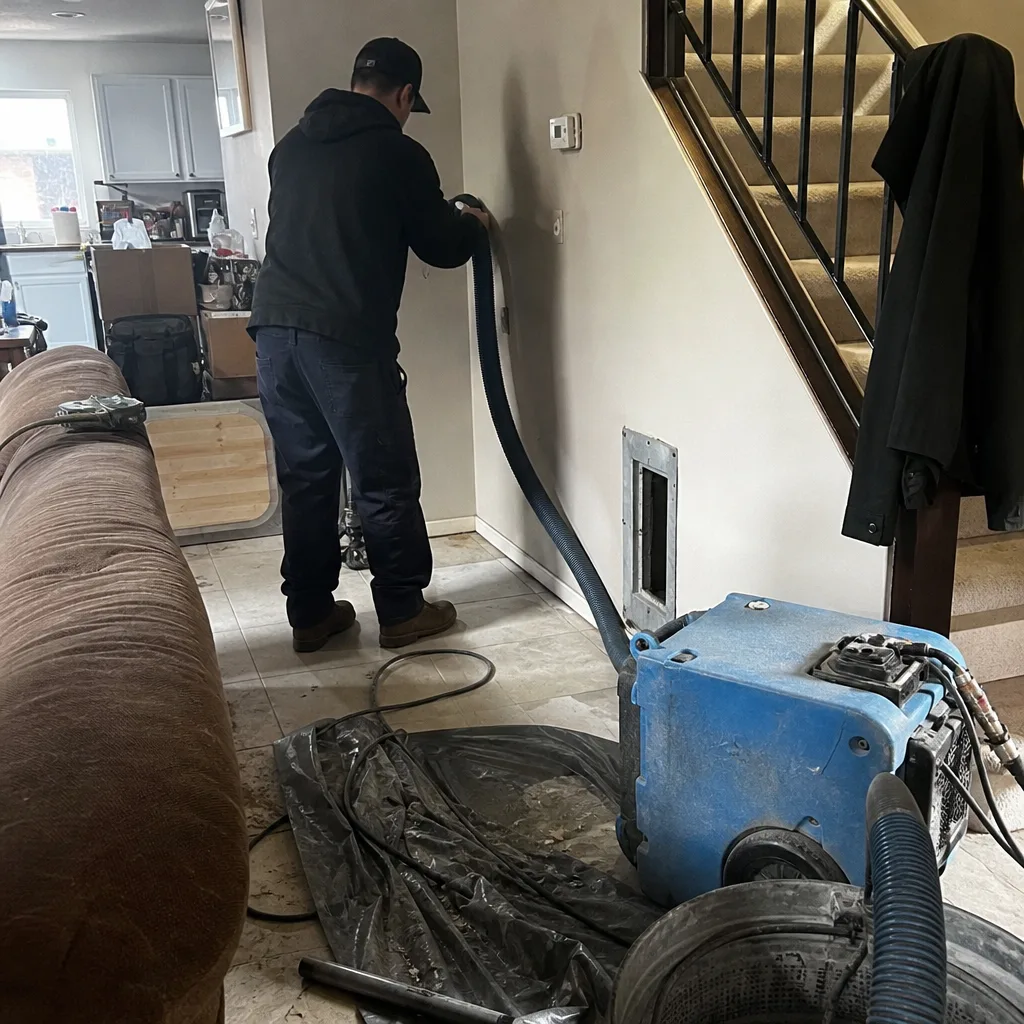 Before
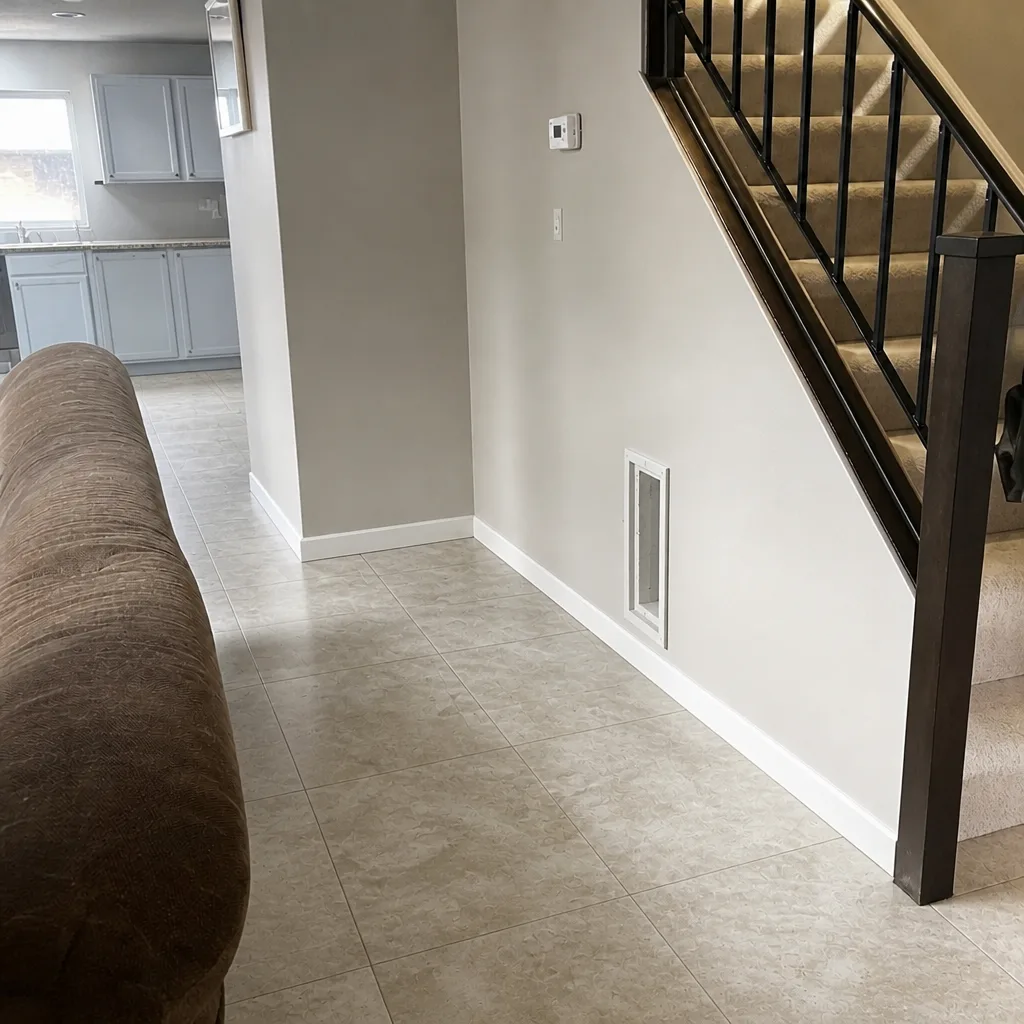 After
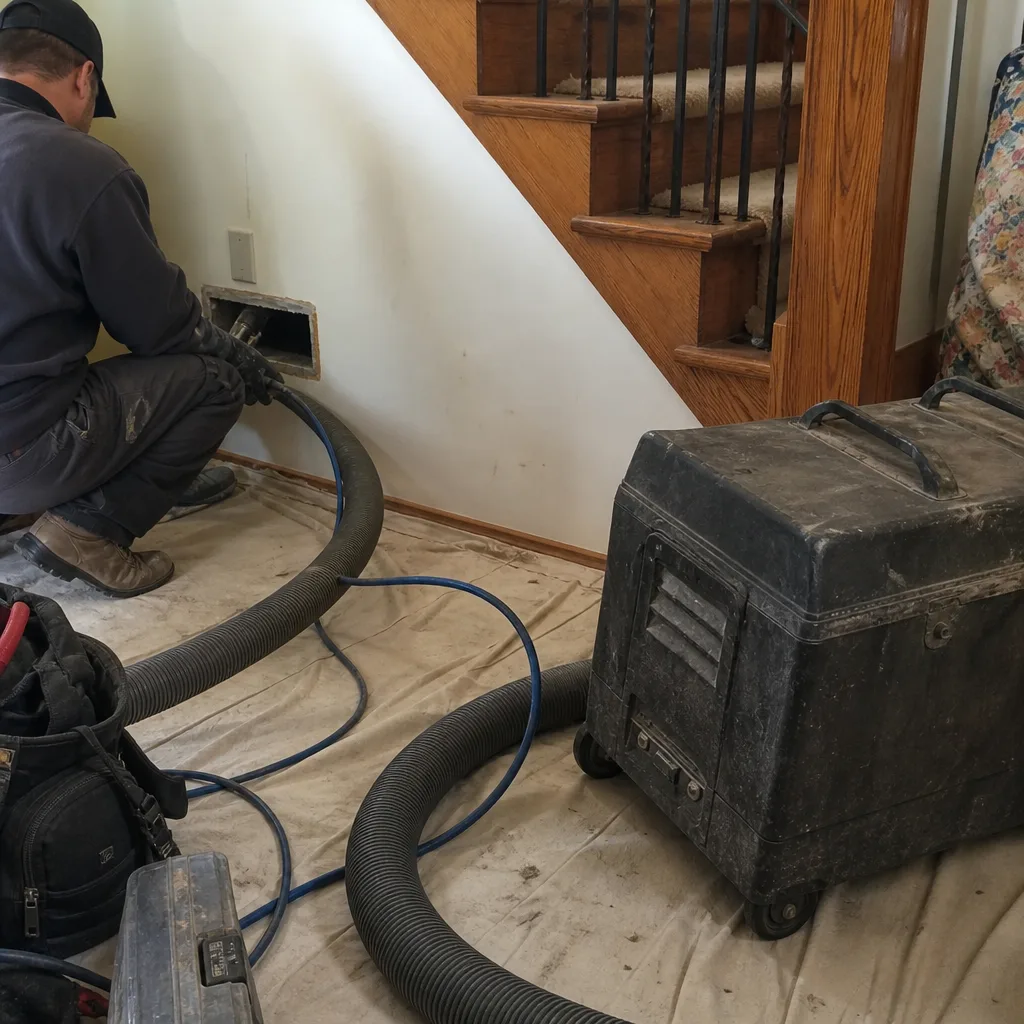 Before
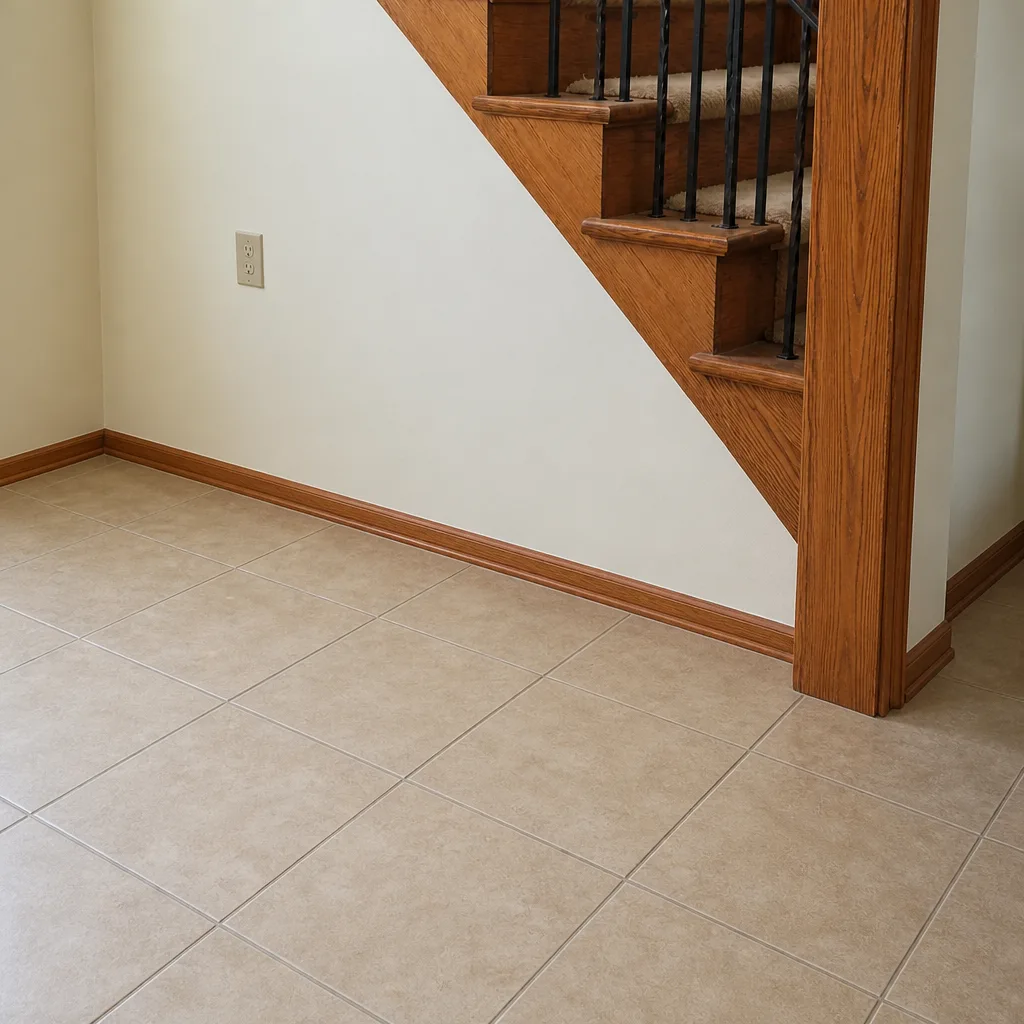 After
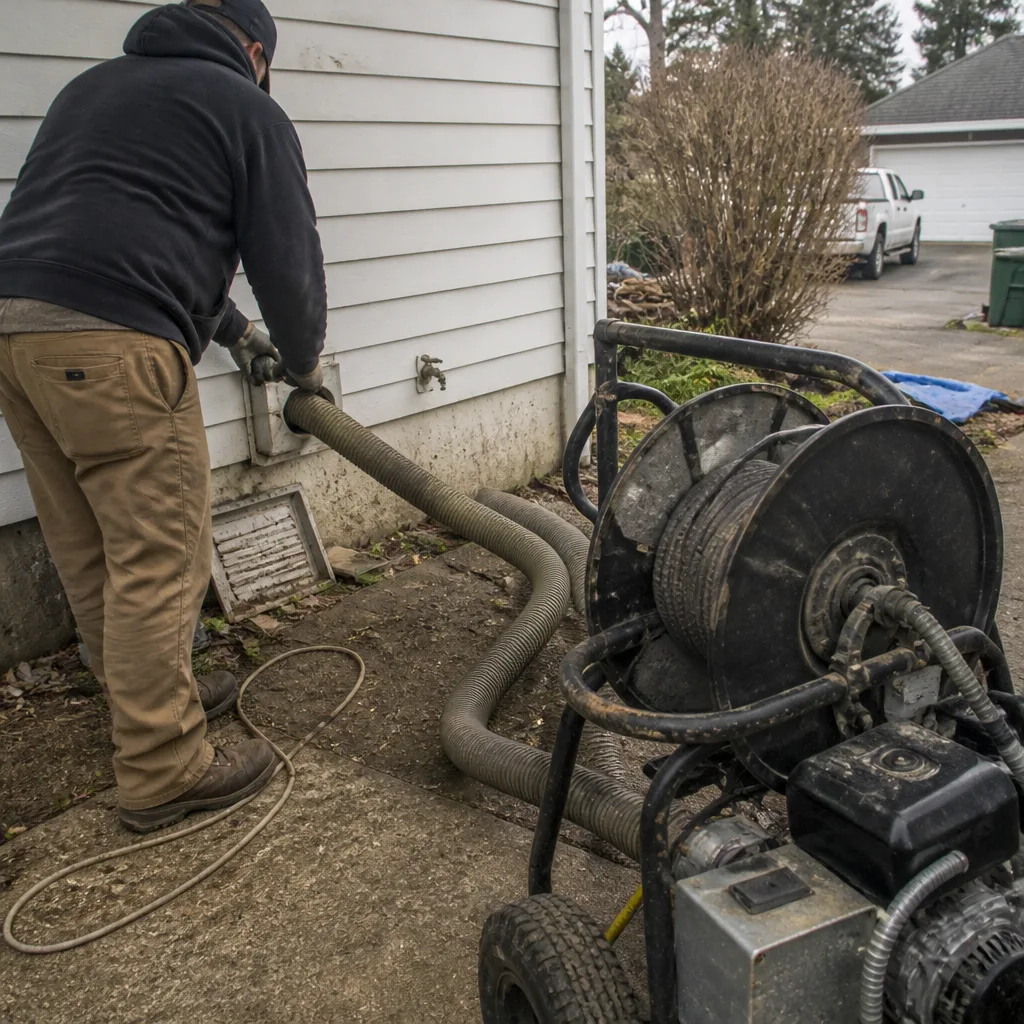 Before
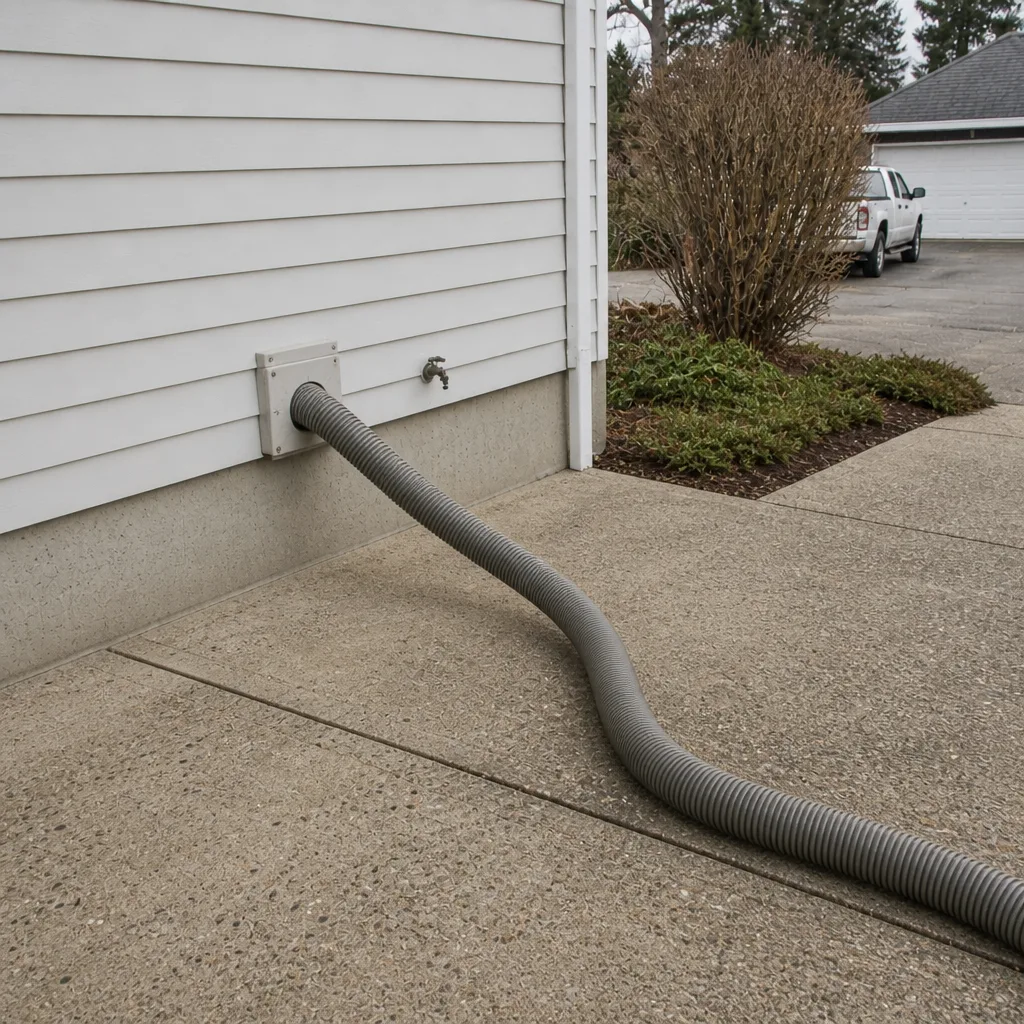 After
Common Mistakes to Avoid
- Buying a $30 brush kit and thinking the job is done. A brush kit dislodges material without removing it. In a Tacoma home with any age to it, this moves twice as much dust into the air the family breathes as it pulls out.
- Skipping the return side. Homeowners clean supply registers and forget the returns, which are where the largest debris loads collect. The return plenum and trunk often hold more material than the entire supply side. Missing them leaves the worst of the accumulation in place.
- Ignoring the dryer vent because the dryer is still working. Lint buildup doesn’t announce itself until the fire. On Tacoma homes with long vent runs or multiple elbows, the dryer keeps heating and the airflow drops without any obvious warning to the homeowner.
- Running a shop vac on the return grille and calling it cleaning. A shop vac pulls about as hard as a household vacuum with a smaller hose. It’s fine for surface grille dust, useless for the interior of the duct system, and the additional airborne dust it releases is a net negative if anyone in the house has asthma or allergies.
- Assuming a new filter solves a duct cleaning problem. A filter downstream of the ducts can’t clean ducts. Filter changes are important, but they don’t remove what’s already bonded to the duct walls.
- Choosing a low-priced coupon over a real estimate. In this trade, the low teaser price and the final invoice are rarely the same number. A flat price agreed before work starts, per system, protects you from that gap.
- Ignoring musty smells through the dry season. Tacoma’s wet months push moisture into any crawlspace or unconditioned duct run. A smell that comes for a few days and disappears usually means moisture is cycling, not that the problem resolved itself.
When to Call a Professional
Call a professional when any of the following applies: renovation dust was introduced into the system within the last year, there’s any sign of rodents or biological contamination, you smell moisture when the system starts, the ductwork is more than 20 years old and never cleaned, airflow has clearly dropped from room to room, or a family member’s symptoms track with the times the HVAC runs. Any one of those is enough. If two or more apply, you’re past the point where DIY maintenance adds value. Tacoma Air Duct Cleaning Experts offers free estimates in Tacoma – call (877) 703-6064. We answer 24/7. Fast dispatch from 7am to 7pm, Sunday through Friday.
Frequently Asked Questions
Residential air duct cleaning in Tacoma is typically quoted per system, not per vent, and the honest range for a full-service residential job (ducts, plenum, coil, registers, sanitizing) runs between a few hundred and roughly a thousand dollars depending on square footage, number of zones, and whether repair or sealing work is needed. Anything quoted at or below a common coupon price is almost certainly an entry quote that will grow once the technician is inside. The written estimate is what sets the final price. Call (877) 703-6064 for an exact quote – estimates are free.
Because the cheapest quote usually doesn’t include what the more complete quote includes. Entry pricing often covers the accessible ducts only, uses entry-level equipment, excludes the coil and plenum, skips sanitizing, and prices repair work separately at a markup once you’ve already committed. Ask what’s actually included: how many runs, the trunk, the coil, the sanitizer, containment, and before-and-after photos. If those answers aren’t in the written estimate, the lower number isn’t a lower price – it’s a smaller job. Call (877) 703-6064 for a flat, per-system quote.
Before-and-after photos taken inside your own ducts during the cleaning are the only proof that matters. Any professional service should provide them as part of the final documentation. A coupon-price visit that produces a receipt but no photos is a job you can’t verify. Ask for before-and-after photos before you book, and ask to see the duct interior at the start of the job. Call (877) 703-6064 to see how our process documents the work.
For a typical Tacoma home with no pets, no smokers, and no recent renovation, every three to five years is reasonable. Homes with shedding pets, indoor smokers, or anyone with respiratory sensitivity benefit from every two to three years. Homes that just went through a renovation, or that have had a rodent or moisture event, need it now regardless of schedule. Filter maintenance stays on the 30-day cycle no matter what. Call (877) 703-6064 to work out the right interval for your home – estimates are free.
You can and should remove lint from the termination cap and the last accessible foot of the dryer vent run every few months – that’s the highest-risk spot. The full run between the dryer and the outside, especially if it’s more than a few feet long or has multiple elbows, needs professional equipment. A consumer brush kit that doesn’t extract lint can compress it against an elbow and create a blockage that wasn’t there before. Call (877) 703-6064 for a dryer vent cleaning estimate.
If the ducts leak, cleaning is not enough. Cleaned ducts that still leak will refill with dust pulled in from a crawlspace or attic faster than clean ducts that are sealed. In homes over 20 years old, we usually find multiple failed mastic seams or disconnected collars. Repair and sealing closes those gaps, so cleaning holds. If you’re not sure, ask for a leak assessment as part of the estimate – it’s the difference between a cleaning that lasts and one that gets undone in 18 months. Call (877) 703-6064 to schedule.
The Bottom Line
DIY air duct cleaning isn’t dangerous, but it’s structurally incomplete. You can do a lot of legitimate maintenance – registers, filters, dryer vent cap, visual inspection – and it’s worth doing. What you can’t do is remove debris that’s bonded to duct walls and sitting in the trunk lines, because consumer tools can’t pull the air volume needed to extract what a brush dislodges. If your Tacoma home has more than 10 years of buildup, recent renovation dust, pets, moisture, or older ductwork, the professional service is the right call. And when you do call, ask for a flat price per system and before-after photos of your own ducts. That’s the whole test. Call (877) 703-6064. We answer 24/7. Fast dispatch from 7am to 7pm, Sunday through Friday. Estimates are free.
Written by the team at Tacoma Air Duct Cleaning Experts.