
Honeywell Air Duct Cleaning in Tacoma: A Homeowner’s Guide
A Honeywell F300 electronic air cleaner installed in a duct system carrying years of accumulated debris doesn’t purify your air. It filters whatever passes through the cell, while the rest of the load keeps circulating past it. That’s the mistake we see most often in Tacoma: homeowners buy a Honeywell filter or UV system expecting cleaner air, then run it inside ductwork that was never cleaned or sealed. The equipment is fine. The system around it isn’t. If you’d rather not sort through this yourself, call (877) 703-6064.
Why Honeywell Equipment Needs Clean Ducts First
Honeywell builds whole-home filtration and air treatment products to sit inside a duct system that’s already doing its job. The F100 and F200 media filters, the F300 electronic air cleaner, the UV100 and TrueUV germicidal lamps: each one has a rated performance that assumes reasonably clean, reasonably sealed ductwork. Put any of them into a system with heavy buildup and two things happen at once.
First, the equipment works harder than it should. A media filter loads faster when the air reaching it is already carrying debris. An electronic cell fouls sooner and needs cleaning more often. A UV lamp has to penetrate whatever is in the air stream to reach the coil surface, and a debris film on that coil blunts the effect.
Second, and more to the point, the equipment can’t fix what’s downstream of it. A Honeywell filter on the return side cleans the air that reaches it. Ducts with open seams and disconnected joints pull unfiltered air in after that point, and that air arrives at your registers without ever passing through the filter. Honeywell’s own installation guidance points to duct condition and system cleanliness as prerequisites, not optional upgrades.
What this means for your Tacoma home:
- Clean ducts before you rely on a new Honeywell filter or UV system, not after.
- Seal leaks so the treated air reaches the rooms it’s meant for.
- Clean the coil and blower, because filtration upstream doesn’t clean the components downstream.
- Then let the Honeywell equipment do the job it was designed for.
Do UV Germicidal Systems Actually Work in a Leaky Duct System?
Less well than the spec sheet suggests. Honeywell UV products like the UV100 and TrueUV are rated for kill efficiency against airborne and surface biological growth under specific conditions: a defined air velocity, a defined dwell time in the lamp’s exposure zone, and a reasonably tight duct system. That last item gets skipped in almost every sales conversation.
A leaky return duct in a Tacoma home draws in outdoor air and crawlspace air continuously. That air carries new particulate and moisture into the system, and it never passes through the filter first. Debris buildup on the coil and duct walls gives biological growth a surface to sit on, which is exactly what the lamp is meant to prevent. So the lamp is doing its rated work in a space that keeps being re-contaminated from a direction it can’t reach.
Sealing changes the math. Once the system is tight and the coil is clean, the lamp’s exposure zone is stable, the air velocity is predictable, and the rated efficiency becomes something close to what actually happens in your home. That’s not a knock on Honeywell. It’s how UV treatment works in any brand. The equipment can only control the air that reaches it.
One safety note: UV-C lamps are hazardous to eyes and skin, and the wiring inside an air handler is live. Lamp replacement and any work inside the unit belongs to a trained technician, not a weekend project. We’d rather turn down the work than see someone get hurt.
Should You Clean Ducts Before or After Honeywell Installation?
Before, in almost every case. The exception is a duct system that was installed or fully renovated recently and has never carried a full load of debris. Here’s how we think through it.
- Duct age and condition. If the ducts are original to an older Tacoma house, or if anyone has run the system through a remodel, cleaning comes first. Construction dust and drywall fines settle into every branch line and won’t leave on their own.
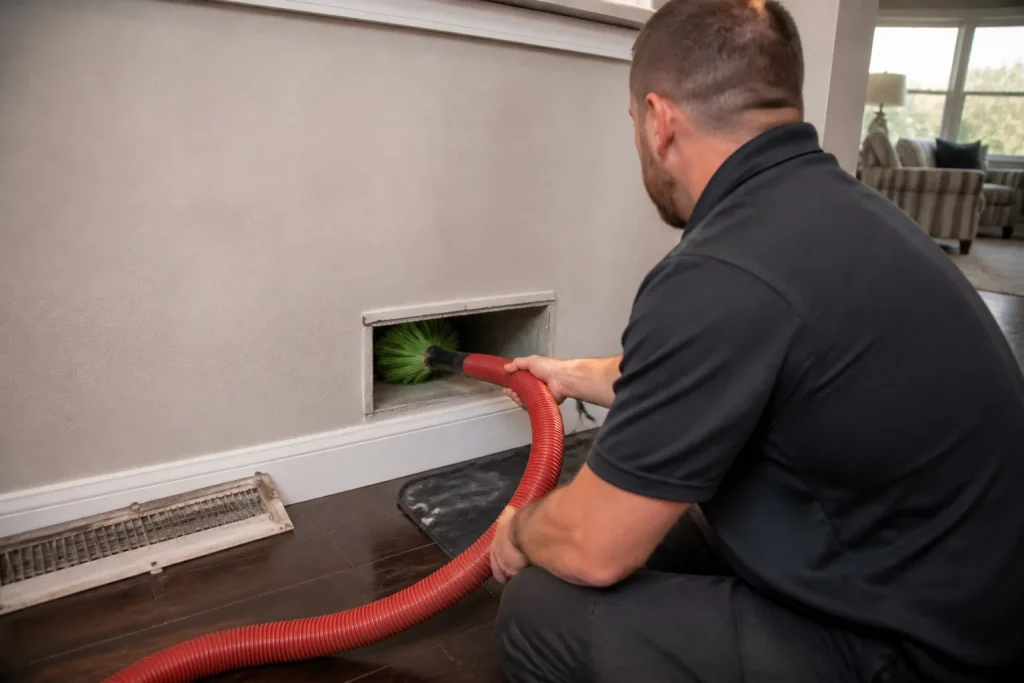
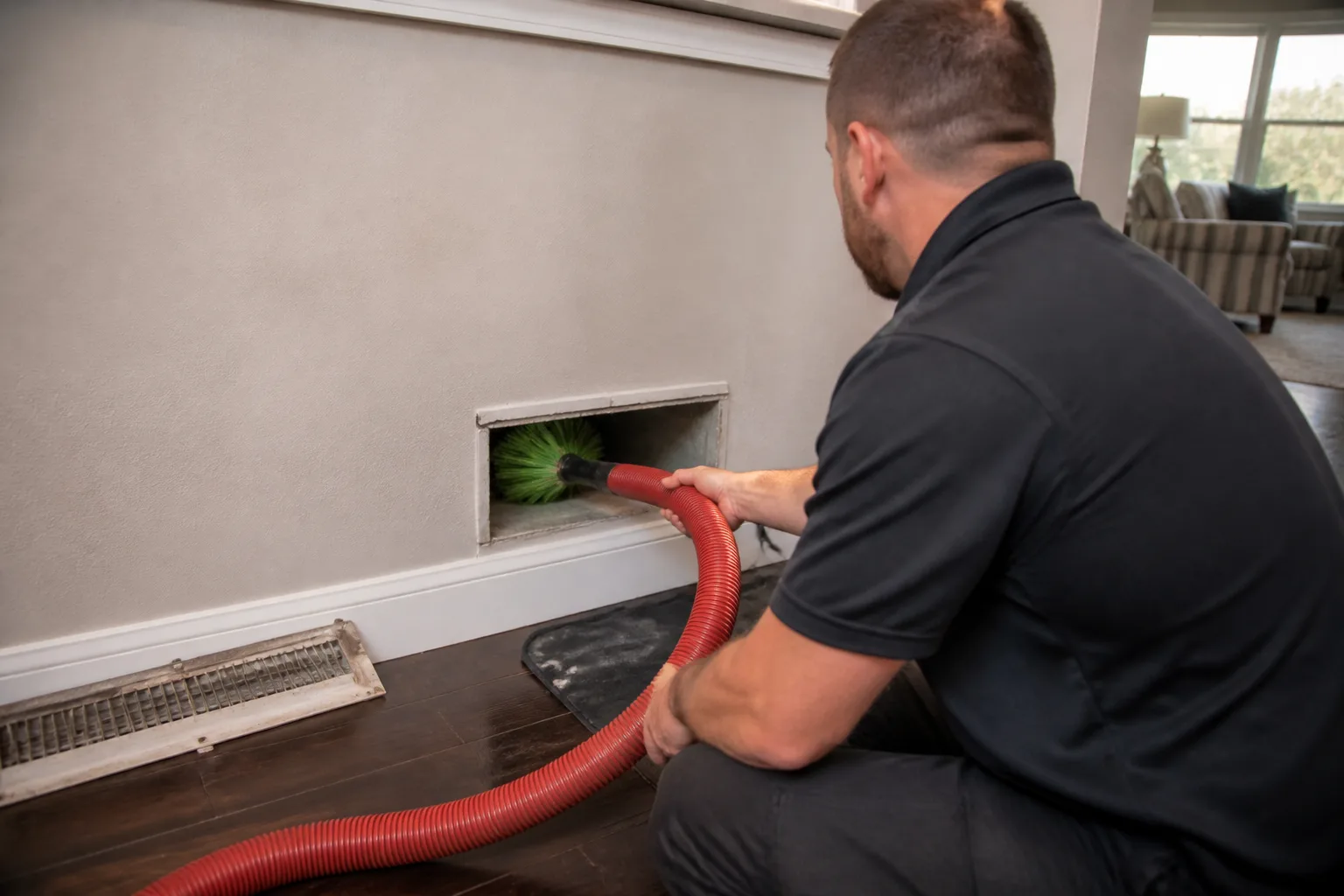
- What’s already installed. If a Honeywell media cabinet is already in place, the filter gets pulled before cleaning and a fresh one goes in after. Running a Rotobrush or Nikro system through ductwork with an active filter still in position loads the filter with debris you just paid to remove.
- Visible evidence. Pull a register and look inside with a light. A light film is normal. A mat of dust, debris stuck to the duct walls, or visible buildup on the blower tells you the system needs work before new equipment goes on it.
- Leak check. Seams, joints, and connections at the plenum and trunk. Cleaning a leaky system is half a job; the leaks pull contamination right back in.
If you’re installing a new Honeywell system and the ducts have never been cleaned, doing both in the right order saves you from cleaning twice. That’s the practical argument, and it’s the one we make to homeowners in Tacoma who ask which to schedule first.
How Cleaning and Sealing Affect Honeywell Whole-Home Humidifiers
Honeywell’s HE360 and TrueEASE humidifiers are bypass or fan-powered units that depend on steady airflow through the duct system to distribute moisture evenly through the house. They’re good products, and they work when the duct system behaves. What changes after a full cleaning and sealing job is the pressure balance.
A duct system with open seams and disconnected joints leaks air in two directions. Supply ducts lose conditioned air into wall cavities and crawlspaces before it reaches the register. Return ducts pull in air from wherever the pressure difference finds an opening. When you seal those leaks, the static pressure in the system normalizes, airflow at each register comes closer to the design value, and the humidifier’s output distributes the way it was intended.
Homeowners in Tacoma sometimes notice this as a humidifier that suddenly “works better” after duct work. It didn’t get better. It stopped fighting a leaking system. The same principle applies to filtration: a sealed system means your Honeywell filter sees a predictable volume of air, and its rated efficiency holds. Duct leaks don’t fix themselves, so sealing is the piece that keeps the rest of the system honest.
What Belongs in Your Annual Maintenance Scope
If you have Honeywell equipment in your Tacoma home, treat the duct system and the equipment as one maintenance item, not two. Here’s what we’d put in a yearly scope:
- Visual inspection of the duct interior at a few registers, checking for new buildup or moisture.
- Filter service on the Honeywell media cabinet, or cell cleaning on an electronic air cleaner, per the manufacturer’s interval.
- UV lamp check for output and condition, with replacement on the manufacturer’s schedule.
- Coil and blower inspection, since those are where the system’s real performance lives.
- Leak check on accessible seams and joints, especially after any remodeling.
- Dryer vent cleaning, which isn’t part of the HVAC system but belongs in the same annual habit for fire safety.
Keeping records of this work matters for warranty purposes, and it matters for you: it’s how you know what was actually done. We clean the whole system and leave before-and-after photos of your own ducts, not a stock image from a brochure.
When to call a pro
If you’ve pulled a register and seen debris stuck to the duct walls, if your Honeywell filter is loading faster than it should, or if your system has never been cleaned and you’re about to install new equipment, that’s the moment. Rotobrush and Nikro systems are purpose-built for this work, and Abatement Technologies filtration keeps the cleaning contained so your living space stays protected while we work. For related work in Tacoma, see our pages on air duct cleaning, HVAC cleaning, and dryer vent cleaning.
The Bottom Line
Honeywell makes good filtration, UV, and humidification equipment. None of it can overcome a dirty, leaky duct system. The sequence that works is straightforward: inspect the system, clean it thoroughly, seal the leaks, then let the Honeywell equipment do what it was rated to do. If you’re planning a Honeywell installation in Tacoma, get the duct work done first. If you already have the equipment and you’re not sure of the duct condition behind it, a professional inspection answers the question in one visit. Our technicians have up to 13 years of experience with systems like these, and we can work with your equipment and your insurer where relevant. If you’re in Tacoma and need help, Tacoma Air Duct Cleaning Experts offers free estimates. Call (877) 703-6064. We answer 24/7, with fast dispatch from 7am to 7pm, Sunday through Friday.
Frequently Asked Questions
Yes, and in two ways. A cleaner system means less debris reaches the filter, so it loads more slowly and holds its rated efficiency longer. It also means the air reaching the filter is the air the filter is designed to treat, rather than air pulled in through leaks downstream. Call (877) 703-6064 for a free estimate.
You can, but the UV system won’t perform to its rating until the ducts and coil are clean and sealed. The lamp’s kill efficiency depends on stable airflow and a clean surface, and debris-loaded ductwork undermines both. Cleaning and sealing first is the sequence that makes the equipment worth its cost. Call (877) 703-6064 for an inspection.
Ask for before-and-after photos of your own ducts, taken at the registers and at the plenum. A thorough job with professional equipment leaves visible evidence. We provide photos as part of every job, and we agree one flat price per system before work starts, not a per-vent price that grows on site. Call (877) 703-6064 for an exact quote.
Cost depends on system size, number of branch lines, and duct condition. We give an honest whole-system range after an inspection and set the final price in a written estimate before work begins. If a quote you’ve received is drastically lower than others, ask what it covers and whether it includes sealing and coil cleaning. Call (877) 703-6064 for a free estimate.
Written by the team at Tacoma Air Duct Cleaning Experts.
Need Air Duct Cleaning Help?
Call Tacoma Air Duct Cleaning Experts - the local pro we connect you with is licensed and insured, with free written estimates in Tacoma.
(877) 703-6064